

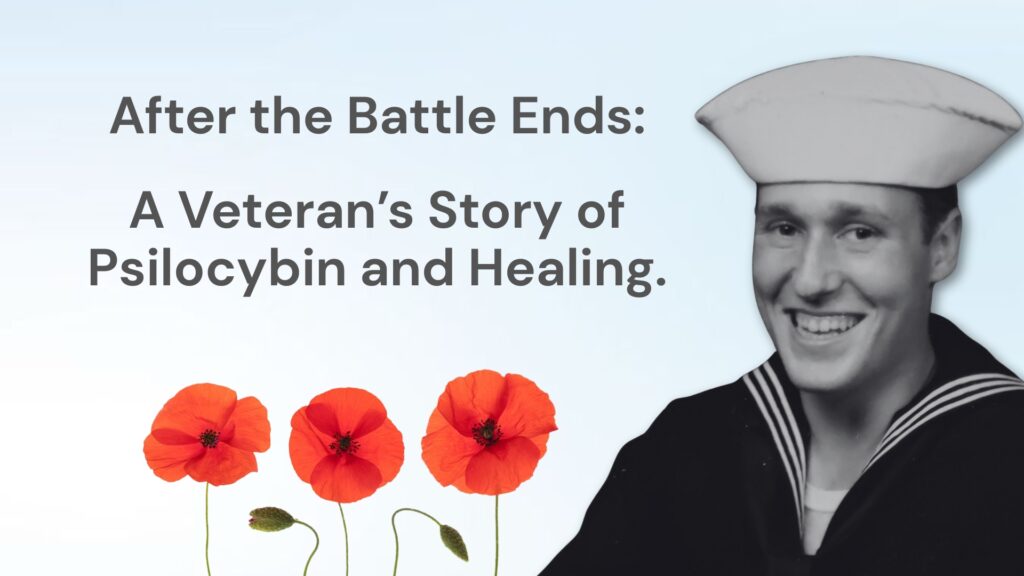
When Sean boarded the USS Dwight D. Eisenhower in 1990, he was a 19-year-old kid from the States with a buzz cut, a pensive sense of responsibility, and no idea that his peacetime service would soon shift into war.
The world was, at that point, at peace. U.S. Navy aircraft carriers patrolled the seas as part of their regular duties, even in peacetime. Sean and his fellow sailors were stationed in Italy, on shore leave, when an emergency recall ordered them back to the ship.
“Our Chief petty officer gathered us together and told us, ‘Well boys, it looks like we’re going to war.’”
As jarring as this form of duty would be for any 19-year-old, soon, a young Sean would find himself in the throes of a scorching Red Sea, facing 130-degree heat aboard the USS Dwight D. Eisenhower — a nuclear-powered aircraft carrier littered with collapsing sailors and roaring jets.
“People are often under the misconception that serving in the Navy is completely safe. This is not the case on the flight deck of an aircraft carrier. There’s constant danger of being blown overboard by jet blast or even worse being sucked into a jet engine. All that being accompanied by the intense heat, it was nearly unbearable.”
Sean was a refueler, lugging hoses across a lengthy deck, fueling fighter jets armed with live bombs.
“At 19, that was terrifying. But you just do your job.”
So there he was: a teenager guided by bravery in the center of Italy, unaware of the aftermath that would follow and the feeling of blistering heat that would never be forgotten.
While Sean never fired a gun himself, nor did he storm a desert with weapons grasped, he would come to learn a hard lesson that many other veterans have felt firsthand: the understanding that trauma does not discriminate by a veteran’s role.
“I didn’t see death in front of me, but I feel I still went through PTSD,” he says. “Certain things still trigger it.”
The Aftermath
Upon returning home after countless grueling days spent on duty, Sean experienced what millions of veterans experience — often in silence. The flashbacks, the lingering tension, the emotional static.
“PTSD has affected me in my life. Depression has also affected my life. Things that you can recall quite clearly after many years and still remain disturbing to you, I believe constitutes as PTSD.”
He recounts the day three members of his ship’s ordnance team were swept overboard in rough seas.
“I opened the hatch to the hangar bay and saw two inches of water on the floor. For a second, I thought the ship was sinking.”
One of the men lost that day was his friend.
“This was truly a wartime scenario. There are certain things that trigger my PTSD to this day. I truly feel strongly that my use of psychedelic mushrooms has, in my mind, made light of a very serious situation. I now actually look back on it with fond memories.”
The Laughter That Healed
In a study published in the International Journal of Neuropsychopharmacology, researchers found that a single dose of psilocybin combined with therapy significantly improved symptoms of PTSD, including depression and anxiety.
And while psilocybin-assisted therapy for PTSD remains in its preliminary stages, countless personal testimonies and advocacy movements have been vocal about the need for more research geared toward effective PTSD treatments, and psilocybin is at the forefront of those being pushed for.
But just because psilocybin is still a “gray area” doesn’t mean it will stop veterans in need from taking mental health matters into their own hands.
“After my time in the Navy, I was introduced to mushrooms by a friend. I found mushrooms to enhance everyday experiences and made everyday experiences comical. Mushrooms made me laugh, like I had never laughed before.”
Something like a night of laughter might not come across as an end-all-be-all way to relieve someone from a condition as complex as PTSD, but for Sean, it would trigger a path of healing: the same way it has done for countless other individuals, both veteran and civilian, over the years.
“When you enjoy mushrooms, life becomes a comedy show. I think that life, with less stress and more laughter, becomes a wonderful existence. I am a proponent of both microdosing and macrodosing. I believe they both have significant value.”
Much like Sean explaining how “day-to-day civilians can experience PTSD as well,” the push for psilocybin in relation to PTSD treatment extends beyond war-inflicted traumas — into the realms of grief, childhood trauma, domestic trauma, and beyond.
In 2021, psilocybin advocacy reached as far as the Royal Family, with Prince Harry making a surprising recount of his own psilocybin experience, saying:
“If you are suffering from a huge amount of loss, grief or trauma … these things have a way of working as a medicine.”
He later detailed the experience as helping him “clear the windshield of misery and loss.”
Studies have shown the therapeutic effects of psilocybin to be more than fiction time and time again, turning more and more skeptics into believers as the years go on — but it’s yet to change the legal status or accessibility of the medicine in the United States.
“I believe that it is completely rational to legalize the use of psilocybin. Maybe at first, through a Dr. Maybe with supervised use. Which I think all of the major studies are doing right now. I have helped a couple of friends that were dealing with difficulties in their lives. After spending a day enjoying psilocybin, they were happier and their day-to-day life became manageable.”
A New Horizon
While we patiently await the accessibility necessary for widespread change, various support groups and psilocybin advocacy forums offer a safe space for other veterans and trauma survivors to educate, support, and share their psilocybin experiences with others.
The opportunity to speak with someone like Sean — a person who knows firsthand not just the trials and tribulations of war-inflicted trauma, but the therapeutic capacity that psilocybin can offer others in the same position — helps add authentic insight into the world of PTSD and the power of mushrooms as a whole.
“Sometimes the trials of life in general are very hard. I think that psilocybin helps to put everything in perspective. It makes you laugh at the absurdities of life. It makes life more enjoyable, more full of laughter and love.”
Fortunately, many individuals, legislators included, are expressing their frustrations, suggesting that no law should prevent veterans from accessing non-harmful substances, particularly those with the potential to enhance the lives of thousands of families across the country.
Taking into account that 13 million people are reported to experience PTSD in the United States alone, the push for newer, more effective treatments is not only relevant but vital.
“If a fellow veteran or a person suffering from PTSD asked me my stance on the use of mushrooms, I would tell them it has made my life much more enjoyable, full of laughter, full of love, full of life.”
To cap our special conversation with Sean, we asked him what, after all these years, he is most grateful for today.
“What am I most grateful for today? I am grateful for my life. For all that I have been through, to make me the man that I am today. I have enjoyed psilocybin with both my little brother and my little sister and I believe it made us closer. No, I am sure that it made us closer. The stories we tell each other about our shared psilocybin adventures even bring us much joy. We laugh at the memories we made. Thank you for what you are doing. I am grateful to give firsthand accounts of the great powers of this wonderful natural mind-altering medicine. It does alter your mind, but I believe for 99.9%, it alters your mind for the better.”