
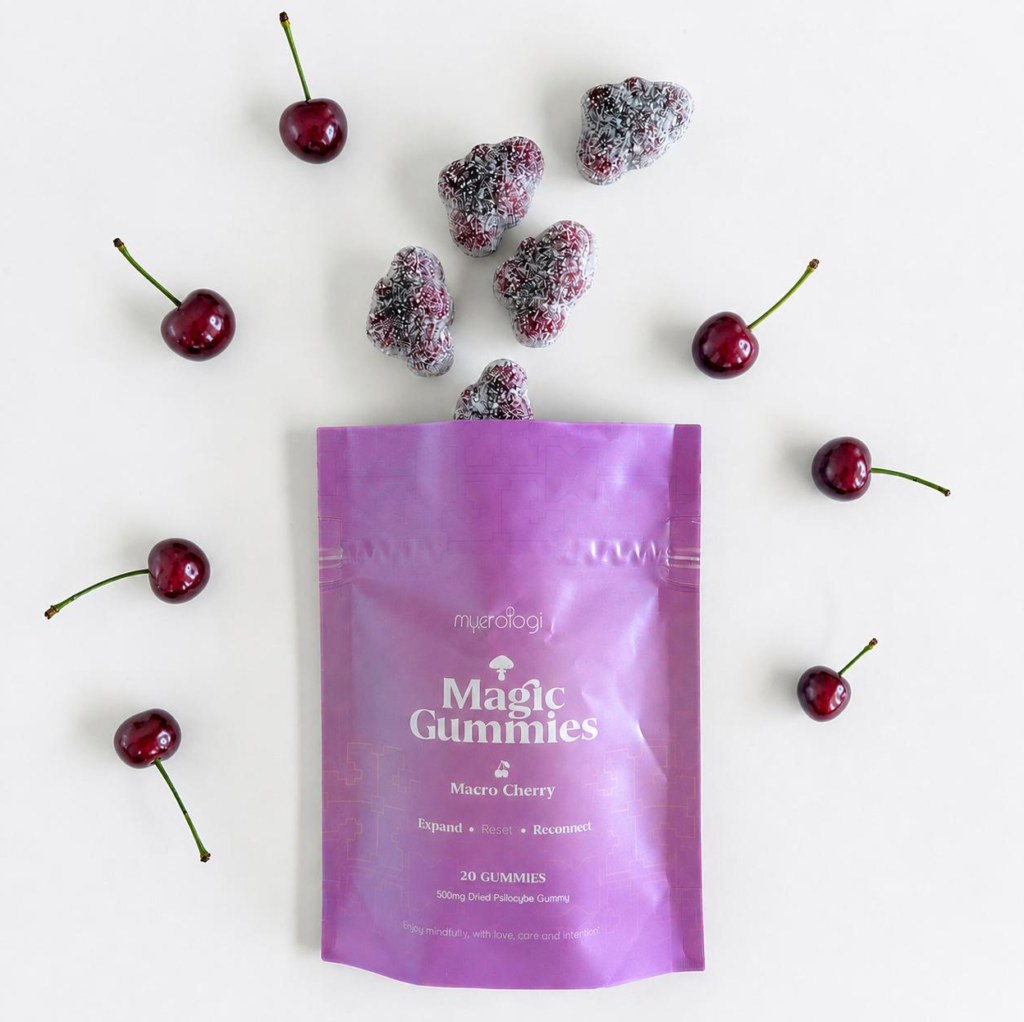
Choosing your first psilocybin product – or your next one – often comes down to a deceptively simple question: which format is right for you? Between magic mushroom gummies, magic mushroom chocolate, and microdosing capsules, the modern psilocybin market offers more options than ever. And while the active compound is the same across all three, the format meaningfully shapes your experience. It influences how quickly psilocybin is absorbed, when effects begin, and how easily you can control your dose.
Each format has earned its place for good reason. Gummies offer approachable flavors and extract-based consistency. Chocolate brings a rich sensory ritual alongside potential absorption benefits from its natural fat content. Capsules strip everything down to pure precision and simplicity. The “best” choice depends on what you are looking for; a structured microdosing protocol, an enjoyable occasional experience, or a format that fits seamlessly into your supplement routine.
This guide compares all three formats across the factors that matter most: dosing precision, onset and duration, taste and experience, versatility, and product quality.
Key Takeaways
- Gummies, chocolate, and capsules all deliver the same active compound (psilocybin), but they differ meaningfully in onset time, dosing precision, absorption dynamics, and overall experience.
- Capsules are the gold standard for microdosing protocols due to their exact, repeatable dosing and no-frills convenience.
- Chocolate offers a sensory-rich experience and may support slightly enhanced absorption due to its natural fat content.
- Gummies use extracted psilocybin for a clean, consistent product with no mushroom taste – making them the most approachable format for newcomers.
- Your ideal format depends on whether you prioritize precision, experience, taste, or versatility.
How Each Format Is Made – And Why It Matters
Understanding how gummies, chocolate, and capsules are manufactured helps explain the differences you will experience as a consumer.
Gummies are made by extracting psilocybin from mushroom material and incorporating it into a flavored gelatin or pectin base. Because the extraction process separates the active compound from raw mushroom matter, gummies deliver psilocybin without the earthy taste or stomach discomfort that some people associate with consuming whole mushrooms.
The result is a product that tastes like a standard candy gummy while delivering a precise amount per piece – Mycrologi’s Magic Gummies are a strong example of this approach.
Chocolate products can use either ground whole mushroom powder or psilocybin extract blended into a chocolate base. Dark chocolate is the most common carrier – cacao contains theobromine and natural fats that some researchers believe may complement psilocybin absorption.
A well-made psilocybin chocolate bar is scored into segments for portioned dosing, though achieving even distribution of mushroom material throughout the chocolate remains the manufacturing challenge that separates quality producers from the rest.
Capsules contain either finely ground dried mushroom powder or extracted psilocybin enclosed in a gelatin or vegan shell. The process lends itself to tight quality control – each capsule is filled to a specific weight, delivering the same amount every time. Many capsule products incorporate complementary ingredients like Lion’s Mane or niacin for nootropic-focused formulations.
Dosing Precision: Which Format Gives You the Most Control?
For anyone following a structured psilocybin practice, dosing precision is not a luxury – it is a requirement. This is where the three formats diverge most noticeably.
Capsules lead the field
Each unit contains a pre-measured amount of psilocybin with no breaking, estimating, or dividing involved. If a microdosing protocol calls for 0.15 grams every third day – a range commonly referenced in psilocybin research – a capsule formulated to that specification delivers exactly that, every time.
This is why capsules have become the default format for structured microdosing.
Gummies offer strong precision
Because gummies use extracted psilocybin measured during manufacturing, each piece in a batch should contain the same amount. The extraction process also eliminates the risk of uneven mushroom particle distribution – a common concern with whole-mushroom products.
Chocolate is precise but carries a caveat
Scored segments allow for portioned dosing, and quality manufacturers invest in homogeneous mixing to ensure each piece contains the same amount. However, if the mushroom material is not perfectly distributed, individual segments can vary in potency – the key variable that differentiates premium chocolate products from less reliable options.
Onset, Duration and Absorption Dynamics
The format you choose can influence how quickly psilocybin takes effect and how the experience unfolds over time.
Practitioners and researchers commonly report that magic mushroom gummies produce effects within 30 to 60 minutes. Because they use extracted psilocybin in a gelatin or pectin base that dissolves readily in the stomach, absorption tends to be relatively efficient. Some practitioners report that gummies produce a slightly faster onset than chocolate, though individual metabolism plays a significant role.
Magic mushroom chocolate is frequently reported to produce effects within 20 to 45 minutes. The fats in chocolate – particularly dark chocolate – may support the absorption of psilocybin, which is thought to have some degree of fat solubility. Some practitioners report that chocolate produces a smoother, more gradual onset compared to other formats. The richer the chocolate and the fuller the stomach, the more this gradual absorption dynamic comes into play.
Microdosing capsules are generally reported to produce effects within 30 to 60 minutes. The shell must dissolve before psilocybin becomes available for absorption, adding a slight delay compared to formats where the active compound is already mixed into a digestible medium. At microdose levels, however, onset timing is less relevant since effects are sub-perceptual by design.
Across all three formats, researchers and practitioners generally note peak effects between 1.5 and 2.5 hours, with total duration ranging from 4 to 6 hours. Research also suggests that fasting state at the time of ingestion may influence onset timing.
Taste, Experience and the Ritual Factor
Psilocybin mushrooms in their raw form have an earthy, bitter taste that many people find unpleasant. All three formats solve this problem in different ways – and the experiential difference matters more than you might expect.
Gummies completely eliminate the mushroom taste. Fruity flavors, satisfying texture, and familiar candy-like presentation make gummies the most approachable format for people who are taste-sensitive or new to psilocybin.
Chocolate transforms the experience into something almost ceremonial. The rich flavor of dark chocolate, the ritual of breaking off a scored segment, and the slow melt on the tongue create a sensory experience that many practitioners value. For moderate to higher doses where experiential context contributes to the journey, chocolate adds a layer of intentionality that other formats do not.
Capsules are deliberately neutral. They have no taste, no texture, and no sensory component – you swallow them with water like any supplement. For microdosers who want their psilocybin practice to be as seamless and unremarkable as taking a daily vitamin, this is a feature, not a limitation. Capsules keep the focus entirely on the subtle, reported effects rather than the consumption experience itself.
Versatility Across Dose Ranges
Not every format is equally suited to every dose range, and understanding these practical boundaries helps you choose wisely.
Microdosing (0.1–0.3g equivalent)
Capsules are the clear winner for structured microdosing protocols like the Fadiman schedule or the Stamets Stack. Their exact dosing and availability in protocol-specific formulations – such as Mycrologi’s Divinity Blend, which combines psilocybin with Lion’s Mane and niacin – make them purpose-built for this use case. Gummies and chocolate can be used for microdosing by consuming small portions, but capsules remove all guesswork.
Moderate doses (1–2.5g equivalent)
All three formats perform well in this range. Chocolate’s sensory experience and absorption dynamics make it particularly appealing here, as does the ease of portioning gummies. Capsules work but require taking multiple units, which some people find less intuitive than eating a measured number of gummy pieces or chocolate segments.
Higher doses (2.5g+ equivalent)
Gummies and chocolate are generally preferred at higher dose levels because of their palatability – consuming a large number of capsules can be cumbersome. Chocolate and gummies also allow for more intuitive portioning across a session if incremental dosing is preferred.
Product Quality: What to Look for in Any Format
The psilocybin market remains largely unregulated, and product quality varies enormously. A study from Oregon State University found that many commercially available psilocybin edibles contained no psilocybin at all, while others included undisclosed synthetic compounds – underscoring the importance of choosing trustworthy brands.
Here is what separates reliable products from questionable ones:
Transparent labeling
Every product should clearly state the psilocybin content per unit – per gummy, per chocolate segment, per capsule. Vague descriptors like “proprietary blend” without milligram specifics are a red flag across all formats.
Third-party testing
Independent lab verification confirms that the product contains what the label claims and is free from contaminants, heavy metals, and undisclosed substances. This is non-negotiable regardless of format.
Reputable sourcing
Quality begins with the mushroom material itself. Look for brands that are transparent about their cultivation practices, extraction methods, and ingredient sourcing. Visit our education hub for a deeper look at how to evaluate psilocybin products.
Appropriate storage guidance
All psilocybin products degrade when exposed to heat, light, and moisture. Chocolate is the most temperature-sensitive format, while capsules tend to have the longest shelf stability. Reputable brands provide clear storage instructions.
Which Psilocybin Format Is Right for You?
The best psilocybin format is the one that fits your goals, your experience level, and the way you want to integrate psilocybin into your life.
Choose capsules if you are focused on structured microdosing, want exact repeatable dosing with zero guesswork, prefer a seamless supplement-style routine, or plan to follow a specific protocol like the Fadiman or Stamets Stack. Capsules are the most practical, precise, and protocol-friendly format available.
Choose chocolate if you value the sensory and ritual dimensions of your psilocybin practice, prefer moderate to higher dose experiences where the consumption context enhances the journey, or appreciate the potential absorption benefits of cacao’s natural fats. Chocolate turns psilocybin into an experience from the very first bite.
Choose magic mushroom gummies if you want the most approachable, taste-friendly entry point into psilocybin, prefer extract-based consistency without any mushroom flavor, or value portability and convenience. Gummies lower the barrier to entry while still delivering reliable, well-dosed experiences.
Many experienced practitioners use more than one format depending on the occasion – capsules for their weekday microdosing schedule and chocolate or gummies for deeper intentional experiences. There is no rule that says you have to commit to a single format. Explore Mycrologi’s full product range across gummies, chocolate, and microdose capsules to find the right fit – or the right combination – for your journey.
Frequently Asked Questions
Are magic mushroom gummies, chocolate, and capsules equally potent?
Yes – the potency of a psilocybin product is determined by the amount of psilocybin it contains, not the format. A gummy, a chocolate segment, and a capsule that each contain the same milligram amount of psilocybin will produce equivalent effects. The differences between formats lie in absorption speed, onset timing, and the consumption experience rather than potency itself.
Which format is best for microdosing?
Capsules are widely considered the best format for microdosing. Each capsule delivers an exact, pre-measured amount of psilocybin, which is essential when working with sub-perceptual doses where small variations matter. Capsules also integrate seamlessly into daily supplement routines and are available in formulations tailored to specific microdosing protocols.
Do chocolate edibles hit faster than gummies or capsules?
Some practitioners report that chocolate produces a slightly faster onset (20 to 45 minutes) compared to gummies and capsules (30 to 60 minutes). This may be related to the fats in chocolate supporting psilocybin absorption. However, onset timing varies significantly based on individual metabolism, stomach contents, and the specific product formulation – so the difference is not guaranteed for every person.
Can you switch between formats?
Absolutely. Many people use different formats for different purposes – capsules for structured microdosing during the week and chocolate or gummies for occasional moderate-dose experiences. The active compound is the same, so switching formats does not affect tolerance or protocol continuity. Just be mindful of the psilocybin content per unit when moving between products, as serving sizes differ across formats.
How do I know if a psilocybin product is high quality regardless of format?
Look for three non-negotiable markers: transparent labeling that specifies exact psilocybin content per serving, third-party lab testing that verifies potency and screens for contaminants, and a brand that is open about its sourcing and manufacturing practices. Research from Johns Hopkins and other institutions has highlighted the importance of reliable dosing in psilocybin use, and that reliability starts with product quality.