

Sometimes, yes. People still name a single session years later as one of the most meaningful days of their lives, and some measures do hold. What the research keeps pointing us toward is the weeks afterwards. In the one trial built to separate dose from support, lasting behaviour change tracked the support people had around them rather than how much they took.
A macrodose is one day. What you do with that day once you wake up the next morning is the part we want to walk through with you.

Where the plasticity story comes from
One dose, and the brain sprouts new connections. That claim comes from real work, and almost every version leaves out the species. Ly and colleagues in 2018 coined the word psychoplastogen. They tested seven compounds, including LSD and psilocin, the compound your body converts psilocybin into, in cultured cortical neurons from embryonic rats, plus flies, zebrafish and adult rats. Their line on the rat cultures reads, “All three compounds increased the number of dendritic spines per unit length … with LSD nearly doubling the number of spines per 10 μm.”
So the doubling everyone quotes is LSD, in cultured rat neurons, in a dish, twenty four hours later. A single 10 mg/kg dose of DMT did raise spine density in living rats a day later, with no percentage reported.
Shao and colleagues in 2021 did the psilocybin version, in mice. A single 1 mg/kg injection, then 1,820 spines tracked across 161 dendritic branches in 12 animals. In those mice, spine density rose 7 ± 2% on day one and 12 ± 3% on day seven, p=0.011. At day 34, imaged in a subset of only four mice, roughly a third of the new spines remained, 34 ± 10% in females and 37 ± 12% in males.
There is no human dendritic spine data for psilocybin at all, because a spine cannot be imaged inside a living person. Every plasticity claim you meet online is still a mouse or a dish underneath, worth holding loosely.
What the human scans caught
The clearest human imaging is Siegel and colleagues in 2024. Seven healthy adults, one excluded so six in the main analyses, each scanned around eighteen times before, during and after 25 mg of psilocybin, against 40 mg of methylphenidate.
Psilocybin’s effect on functional connectivity was “more than threefold larger” than the stimulant’s, and networks stopped looking like distinct networks, most dramatically the default mode network. One change outlived the day, a “persistent decrease in FC between the anterior hippocampus and default mode network, lasting for weeks”, specifically about three weeks.
It also fades. Values had returned to pre-psilocybin baseline by 6 to 12 months, in a follow-up the authors flag as underpowered. Sessions were run by two clinical research staff who built therapeutic alliance beforehand, and “Performing a perceptual task reduced psilocybin-driven FC changes.” What the person was doing while the compound worked changed what it did. The first sign that your own participation matters.
Barrett and colleagues in 2020 looked at emotion. Open-label, no control, no blinding, twelve people, one 25 mg/70 kg dose. At one week, negative affect and amygdala response to faces were both down. At one month the amygdala response was back to baseline, and what remained was raised positive affect and lower trait anxiety.
What held at fourteen months, and what did not
Griffiths and colleagues ran the study that restarted the field in 2006. Double-blind crossover with an active comparator, 36 hallucinogen-naive adults with a regular spiritual practice, 30 mg/70 kg of psilocybin against methylphenidate, eight hour sessions with two monitors in the room.
The 2008 follow-up returned to the same 36 at fourteen months. 58% rated the session among the five most personally meaningful experiences of their lives, 11% called it the single most meaningful thing that had ever happened to them, and 64% said it increased their wellbeing. No volunteer said it decreased their wellbeing, and nothing differed between the two month and fourteen month assessments.
Then a sentence from the same study that rarely travels with it.
Of the measures of personality, affect, quality of life and spirituality assessed across the study, only a scale measuring mystical experience showed a difference from screening.
Eight questionnaires, and seven did not move. What endured with real force was how people rated the experience, rather than a measured shift in their traits. Both of those are true at once, and holding them together is the honest way to read this.
The longest follow-ups we have
Agin-Liebes and colleagues in 2020 went furthest out on one dose. Fifteen of sixteen surviving participants from a cancer-related distress trial were followed up at averages of 3.2 and 4.5 years, and at 4.5 years roughly 60 to 80% still met criteria for clinically significant antidepressant or anxiolytic responses. The authors add their own caution, that “Limited conclusions … can be drawn … due to the crossover design of the parent study.”
The smoking work is the other long tail, an open-label pilot with no control group, fifteen smokers, the sessions sitting inside a fifteen week cognitive behavioural protocol. Twelve of fifteen, 80%, were biologically verified abstinent at six months. At twelve months it was 67%, and at thirty months, 60%. The version usually quoted is 80% at a year, which quietly welds two different numbers together, worth knowing if you have seen it passed around.
The depression trial people cite most, Davis and colleagues in JAMA Psychiatry, was randomised against a waiting list rather than a placebo, and nobody was blinded. Twenty four evaluable participants had two sessions, 20 then 30 mg/70 kg, inside roughly eleven hours of supportive psychotherapy. At twelve months, Gukasyan and colleagues found response of 75% and remission of 58%. Calling that a single macrodose changes the study. The same team also found something that complicates it.
Participant ratings of personal meaning, spiritual experience, and mystical experience after sessions predicted increased well-being at 12 months, but did not predict improvement in depression.
The mystical ratings predicted the good life and said nothing about the depression scores, so any claim that mystical intensity drives lasting clinical improvement is still contested, and we hold it loosely.
The study that pulled the dose apart from the support
This is the one we come back to when someone asks how to plan a session. Griffiths and colleagues in 2018 ran a double-blind randomised trial, 75 healthy completers in three arms of 25. A very low dose, 1 mg/70 kg, with standard support for a spiritual practice. A high dose, 20 then 30 mg/70 kg, with the same support. And the high dose with high support, meaning much more contact and structure.
At six months, both high-dose groups showed large positive changes across interpersonal closeness, gratitude, life meaning, forgiveness, death transcendence, daily spiritual experiences, religious faith and coping, confirmed in community observer ratings. The authors state it plainly, that “Determinants of enduring effects were psilocybin-occasioned mystical-type experience AND rates of meditation/spiritual practices.”
Now the detail that reframes it. At six months, the percentage meditating daily was 32% in the low-dose control group, 20% in the high-dose standard-support group, and 64% in the high-dose high-support group. Minutes per day ran 10.23, 9.93 and 19.33, at p<.01.
The people who took a big dose with ordinary support were meditating less than the people who took almost nothing. Twice the practice showed up only where the support did. That single row is why we keep returning to the weeks afterwards.
Murphy and colleagues in 2022, in the psilocybin arm of the escitalopram trial, reported that “Therapeutic alliance ahead of the second session had a direct impact on final depression scores, not mediated by the acute experience”, beta=-0.49, p<0.001. The relationship moved the outcome without going through the session itself.
Peill and colleagues in 2022 found acute insight at day one predicted wellbeing change at two weeks, rs=0.344, p<0.001, more strongly in people who started low, rs=0.506. Davis and colleagues, surveying 1,661 people, found insight predicted unique variance in wellbeing and life satisfaction “beyond measures of acute mystical-type and challenging effects.” Insight adds something the mystical scales miss.
Where this evidence is thin
Blinding does not hold here, and everyone in the field knows it. Soliman and colleagues in 2024 reviewed sixteen randomised trials and found only eight reported blinding efficacy at all. Among those, people in the placebo condition correctly guessed their assignment an average of 82.3% of the time, and study personnel 91.5%.
treatment effect sizes in psychedelic RCTs are likely over-estimated due to de-blinding of participants and high levels of response expectancy … We urge caution in interpreting effect size estimates from extant psychedelic RCTs.
The head-to-head against an antidepressant did not come out ahead. In the Carhart-Harris phase 2 trial, 59 people, psilocybin against escitalopram, the primary outcome was not significant. The difference on the QIDS-SR-16 at week six was 2.0 points, 95% CI -5.0 to 0.9, p=0.17. Secondary outcomes leaned toward psilocybin but “lacked correction for multiple comparisons.”
The largest single-dose trial is Goodwin and colleagues in 2022, 233 participants across 25 mg, 10 mg and a 1 mg control, all with psychological support. The 25 mg dose beat the control on MADRS at week three by -6.6 points, p<0.001. The 10 mg dose did not, at p=0.18. On durability, their own summary line is the one to hold onto, that “the incidences of response and remission at 3 weeks, but not sustained response at 12 weeks, were generally supportive of the primary results.” Adverse events occurred in 179 of 233 participants, and “Suicidal ideation or behavior or self-injury occurred in all dose groups.”
The durability studies are also small. Fifteen smokers, twelve in the Barrett imaging, seven in the Siegel scans, fifteen at 4.5 years, twenty four in the depression work. Participants were screened carefully, and almost every positive result came from inside many hours of professional support.
Planning the month around the day
Integration is the part we think matters most, and it is also the least studied part of the field. We would rather say so plainly. Bathje and colleagues opened their 2022 concept analysis with the problem.
There are many definitions of psychedelic integration … This seems to have led to confusion about what integration is and how it is best practiced.
No randomised trial has isolated integration as an active ingredient. What we have is Griffiths 2018, where ongoing practice was one of the two determinants of enduring effects, and Peill 2022, where insight at day one predicted wellbeing two weeks later. Haijen 2018 adds that “Having ‘clear intentions’ for the experience was conducive to mystical-type experiences”. In that same survey of 654 people, “baseline trait variables had the strongest effect on the change in well-being.” Who you already were predicted more than the session did. What follows is a reasonable plan built from thin evidence, offered as company rather than instruction.
Before
- Write one question down, something you have been circling for months and would like to look at directly.
- Clear the day and the day after it. When that second day goes back to work, a session becomes a story you tell rather than something that changes a Tuesday.
- Have someone sober with you who knows what you took and when. Absence of physical comfort and social support is a named risk factor for a hard experience.
- Decide beforehand what you will not do. No phone, no driving, no work email, no big conversations with people who are not in the room.
The first twenty four hours
- Write within a day, longhand and unedited, before you have made it make sense. The insight measure that predicted wellbeing two weeks later was taken at day one, while it is still raw.
- Let the conclusions wait. Record what happened and leave the meaning for later.
The month after
- Tell one person in the first week, someone who will ask you about it again in a fortnight.
- Pick one repeatable thing and put it in the calendar with a time attached. Twenty minutes of meditation, or a weekly call with someone you have been avoiding. Daily minutes separated the groups.
- Change one concrete thing about an ordinary weekday. Insight evaporates. A changed Tuesday does not.
- Expect the shine to come off in week two or three. Barrett has the emotional effects fading by a month, so nothing has gone wrong when it does.
- Re-read your day-one notes at day thirty, and see which single line still lands.
- Wait longer than you want to before planning another one. Stacking sessions can become a way of avoiding the part that does the work.
If you want the smaller, steadier version of all this, a microdose is a different tool for a different job. It is subtle yet noticeable, and it lives inside the ordinary week rather than in a cleared day. Plenty of people run microdosing as the ongoing practice and keep macrodosing for once or twice a year.
The care this asks of you
Carbonaro and colleagues asked 1,993 people to describe their single worst psilocybin experience, so the sample is worst-case by design. 39% rated it among the top five most challenging experiences of their lifetime. 11% put themselves or others at risk of physical harm, and 2.7% received medical help. Of those more than a year out, 7.6% had sought treatment for enduring psychological symptoms. There were three cases of enduring psychotic symptoms and three attempted suicides. And 84% still said they had benefited.
The risk factors were estimated dose, duration, difficulty, and the absence of physical comfort and social support. The authors’ framing is the condition attached to the whole safety record.
The incidence of risky behavior or enduring psychological distress is extremely low when psilocybin is given in laboratory studies to screened, prepared, and supported participants.
Screened, prepared and supported. That is the setting the reassuring numbers came from, and nothing that arrives in a package can supply it. The screening is worth doing for yourself, with a doctor who knows your history and what you take. If there is psychosis in your family, please have that conversation first.
If you decide to go
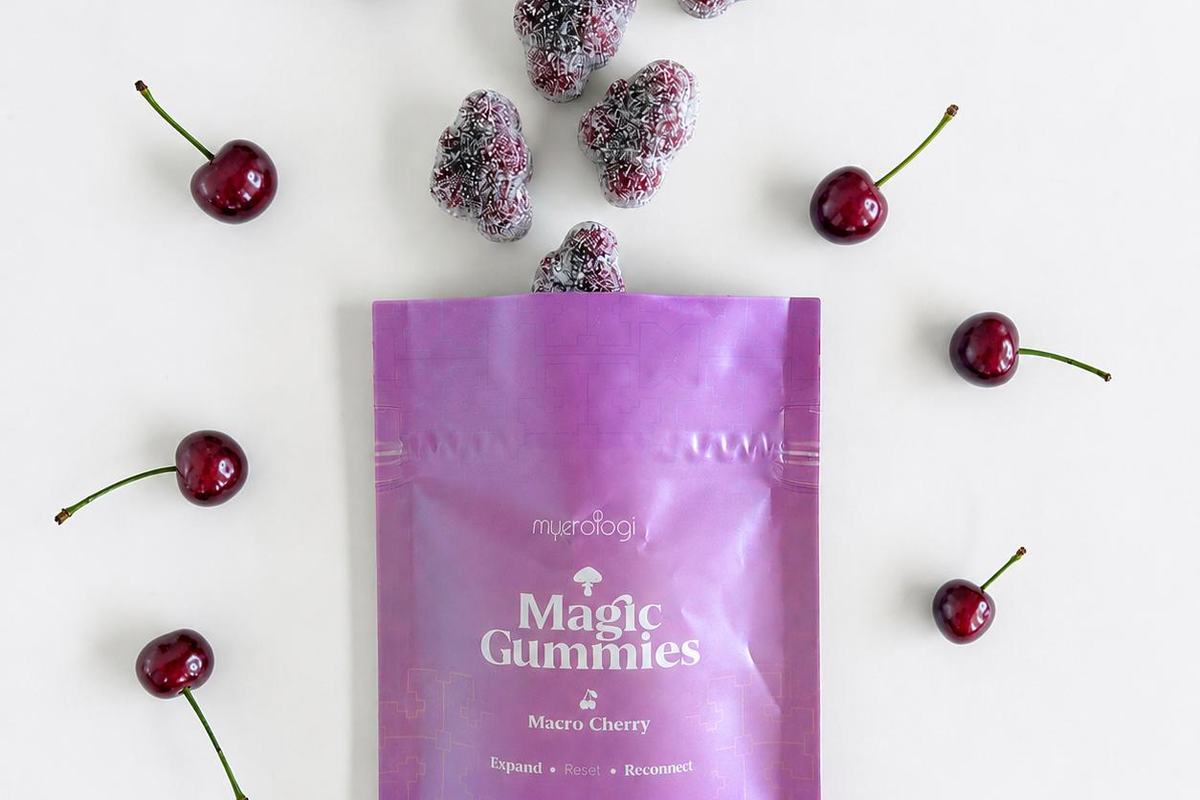
Macro Magic Gummies hold 500mg of dried psilocybe in each cherry gummy, ten or twenty to a bag, from $66, so you know exactly what you took. Albino A+ Chocolate Hearts are the gentler way in, from $40, rated 5.0 from 20 reviews, and you can take a corner rather than the whole thing. If you are not sure which is yours, the quiz takes two minutes. The rest of what we make sits here.
A dose opens a window for a few weeks. The month you spend inside that window is where anything durable gets built. No gummy does that part for you. That is where we come in.
Sources
- Ly et al. (2018). Psychedelics promote structural and functional neural plasticity. Cell Reports, 23(11), 3170. https://pmc.ncbi.nlm.nih.gov/articles/PMC6082376/
- Shao et al. (2021). Psilocybin induces rapid and persistent growth of dendritic spines in frontal cortex in vivo. Neuron, 109(16), 2535. https://pmc.ncbi.nlm.nih.gov/articles/PMC8376772/
- Siegel et al. (2024). Psilocybin desynchronizes the human brain. Nature, 632(8023), 131. https://pmc.ncbi.nlm.nih.gov/articles/PMC11291293/
- Barrett et al. (2020). Emotions and brain function are altered up to one month after a single high dose of psilocybin. Scientific Reports, 10, 2214. https://pmc.ncbi.nlm.nih.gov/articles/PMC7010702/
- Griffiths et al. (2006). Psilocybin can occasion mystical-type experiences having substantial and sustained personal meaning and spiritual significance. Psychopharmacology, 187(3), 268. https://pubmed.ncbi.nlm.nih.gov/16826400/
- Griffiths et al. (2008). Mystical-type experiences occasioned by psilocybin mediate the attribution of personal meaning and spiritual significance 14 months later. Journal of Psychopharmacology, 22(6), 621. https://pmc.ncbi.nlm.nih.gov/articles/PMC3050654/
- Griffiths et al. (2018). Psilocybin-occasioned mystical-type experience in combination with meditation and other spiritual practices produces enduring positive changes in psychological functioning and in trait measures of prosocial attitudes and behaviors. Journal of Psychopharmacology, 32(1), 49. https://pmc.ncbi.nlm.nih.gov/articles/PMC5772431/
- Davis et al. (2021). Effects of psilocybin-assisted therapy on major depressive disorder. JAMA Psychiatry, 78(5), 481. https://pmc.ncbi.nlm.nih.gov/articles/PMC7643046/
- Gukasyan et al. (2022). Efficacy and safety of psilocybin-assisted treatment for major depressive disorder, prospective 12-month follow-up. Journal of Psychopharmacology, 36(2), 151. https://pmc.ncbi.nlm.nih.gov/articles/PMC8864328/
- Johnson et al. (2014). Pilot study of the 5-HT2AR agonist psilocybin in the treatment of tobacco addiction. Journal of Psychopharmacology, 28(11), 983. https://pmc.ncbi.nlm.nih.gov/articles/PMC4286320/
- Johnson et al. (2017). Long-term follow-up of psilocybin-facilitated smoking cessation. American Journal of Drug and Alcohol Abuse, 43(1), 55. https://pmc.ncbi.nlm.nih.gov/articles/PMC5641975/
- Agin-Liebes et al. (2020). Long-term follow-up of psilocybin-assisted psychotherapy for psychiatric and existential distress in patients with life-threatening cancer. Journal of Psychopharmacology, 34(2), 155. https://pubmed.ncbi.nlm.nih.gov/31916890/
- Murphy et al. (2022). Therapeutic alliance and rapport modulate responses to psilocybin assisted therapy for depression. Frontiers in Pharmacology, 12, 788155. https://pmc.ncbi.nlm.nih.gov/articles/PMC9009076/
- Peill et al. (2022). Validation of the Psychological Insight Scale. Journal of Psychopharmacology, 36(1), 31. https://pmc.ncbi.nlm.nih.gov/articles/PMC8801624/
- Davis et al. (2021). Development of the Psychological Insight Questionnaire among a sample of people who have consumed psilocybin or LSD. Journal of Psychopharmacology, 35(4), 437. https://pmc.ncbi.nlm.nih.gov/articles/PMC8056708/
- Haijen et al. (2018). Predicting responses to psychedelics, a prospective study. Frontiers in Pharmacology, 9, 897. https://pmc.ncbi.nlm.nih.gov/articles/PMC6225734/
- Bathje et al. (2022). Psychedelic integration, an analysis of the concept and its practice. Frontiers in Psychology, 13, 824077. https://pmc.ncbi.nlm.nih.gov/articles/PMC9386447/
- Muthukumaraswamy et al. (2021). Blinding and expectancy confounds in psychedelic randomized controlled trials. Expert Review of Clinical Pharmacology, 14(9), 1133. https://pubmed.ncbi.nlm.nih.gov/34038314/
- Soliman et al. (2024). Blinding efficacy in psilocybin randomized controlled trials. Psychopharmacology, 241(6), 1101. https://pmc.ncbi.nlm.nih.gov/articles/PMC11529604/
- Carhart-Harris et al. (2021). Trial of psilocybin versus escitalopram for depression. New England Journal of Medicine, 384(15), 1402. https://pubmed.ncbi.nlm.nih.gov/33852780/
- Goodwin et al. (2022). Single-dose psilocybin for a treatment-resistant episode of major depression. New England Journal of Medicine, 387(18), 1637. https://pubmed.ncbi.nlm.nih.gov/36322843/
- Carbonaro et al. (2016). Survey study of challenging experiences after ingesting psilocybin mushrooms. Journal of Psychopharmacology, 30(12), 1268. https://pmc.ncbi.nlm.nih.gov/articles/PMC5551678/
This article is not intended to diagnose, treat, cure or prevent any disease.