

If you are reading this while lonely, we want to be straight with you. Being alone and feeling lonely are different things with different answers. Loneliness is the distance between the connection you want and the one you have, which is why a full house can feel empty and a quiet night alone can feel fine. Closing that distance starts with the people already near us.
Two words we tend to use as one
Alone is a fact about a room. Lonely is a feeling about a distance. The World Health Organization’s 2025 Commission on Social Connection puts it this way.
A negative, subjective emotional state resulting from a discrepancy between one’s desired and actual experience of connection.
The US Surgeon General’s 2023 advisory draws the same line, describing social isolation as “objectively having few social relationships, social roles, group memberships, and infrequent social interaction,” while “loneliness is a subjective internal state.”
You can measure the gap. A nationally representative twin cohort followed 2,232 young people and found loneliness and social isolation correlated at only r=0.31 at age 12 and r=0.38 at age 18, with adult studies usually landing lower still, around 0.18 to 0.30. Things that overlap that little are answering different questions. Hawkley and Cacioppo said it plainly back in 2010. “Loneliness is not simply being alone.”
Marriage shows it most clearly. Across 953 heterosexual couples in the National Social Life, Health and Aging Project, about one in six older married men and women reported moderate or intense feelings of loneliness. People in aversive marriages were lonelier than those in supportive, indifferent or ambivalent ones. In the authors’ words, “these effects of poor marital quality on loneliness were not ameliorated by good relationships with friends and relatives.” Good friendships did not cover for a hard marriage, and if you have lived that, you already knew.

What the numbers say
This next part is heavy, and we would rather hand it over whole. The largest analysis pooled 70 prospective studies covering 3,407,134 people, followed for an average of 7.1 years. Social isolation carried a 29% increased likelihood of mortality, loneliness 26%, living alone 32%. Those are population numbers, not a forecast for anyone reading. The finding most summaries leave out is age. The effect was larger in people under 65 than in people over 75, at odds ratios of 1.57 against 1.14. Whatever the stereotype says, this does not wait for old age.
An earlier meta-analysis from the same group, 148 studies and 308,849 people, put the increased likelihood of survival at 50% for people with stronger social relationships, an effect strongest for complex measures of social integration, at an odds ratio of 1.91, and weakest for the bare fact of living alone, at 1.19. Even in the mortality data, quality of connection did more work than count.
A review of 16 longitudinal datasets, covering 4,628 coronary heart disease events and 3,002 strokes, put poor social relationships at a 29% increase in incident coronary heart disease and a 32% increase in stroke. The Surgeon General’s advisory carries the line most people have heard, that “lacking social connection can increase the risk for premature death as much as smoking up to 15 cigarettes a day.” That line compares one risk against another rather than counting deaths.
On prevalence, the WHO put it at about 16% of people worldwide between 2014 and 2023, one in six, and attributed roughly 871,000 deaths a year to it. Meta and Gallup, surveying 142 countries, found 24% feeling very or fairly lonely. If you are inside those figures, you are in a large room. Both found the same age pattern, opposite to what most people assume. The WHO recorded 20.9% among 13 to 17 year olds, falling with age, and Gallup found people over 65 the least lonely at 17%.
One more piece of honesty. The WHO is explicit that the trend line is unknown. “Previous data are too limited to determine whether the rates of social isolation and loneliness have risen or fallen.” The same report puts the share who feel fairly or very connected at about 72%. The scale is real. Whether it worsens every year has not been established.
Loneliness has a way of keeping itself going
If loneliness were only a shortage of people, it would sort itself out the moment the room filled up. Hawkley and Cacioppo describe perceived social isolation as something that raises “vigilance for threat” and heightens “feelings of vulnerability while also raising the desire to reconnect.” The wanting and the wariness arrive together, a tiring pair to carry.
They describe a self-reinforcing loop with attentional and memory biases inside it. When we are lonely we pick up on social threat faster and hold on to the difficult parts of an interaction longer, so we walk into the next conversation braced, which changes how we come across, which changes what comes back. That is why they argue support has to work on interpretation as well as opportunity.
None of that is a character flaw. It is what any nervous system does when something it needs starts to feel unreliable.
Time on your own is a separate question
Solitude gets treated as the thing to escape, which is unfair to it. Four experiments with 114, 108, 343 and 173 participants found that 15 minutes alone produced a deactivation effect. High-arousal positive feeling dropped and so did high-arousal negative feeling, at r=-0.33 and r=-0.30. Calmness rose at r=0.20, and so did loneliness and drowsiness at r=0.14. Time alone turns the volume down on everything, pleasant and unpleasant alike.
What decided the flavour was choice. In the authors’ words, “autonomous motivation for solitude led to less loneliness and more calmness.” An evening in that you picked and an evening in that happened to you are two different evenings, even when the room is identical.
What has been shown to help, and where the research disagrees with itself
The literature argues with itself here, and we would rather you saw it.
A 2011 meta-analysis of 50 loneliness interventions looked only at the randomised studies. Social cognitive training, meaning work on how people interpret social situations, produced an effect size of -0.598 across four studies. Social support produced -0.162 across twelve. Social skills training produced +0.017, and increasing opportunities for social interaction produced -0.062 at p=0.67, neither of which amounts to much. On that evidence, changing how somebody reads a room did around four times the work of adding more rooms.
A larger and newer review complicates that. Thirty-one randomised trials with 3,959 participants, meta-analysed across 28, found psychological interventions reduced loneliness with an overall effect size of g=0.43, alongside a lot of variation. But the type of therapy did not predict the result. CBT-based and non-CBT approaches performed similarly, “differing to Masi and colleagues (2011).” So the confident version, that cognitive work is the proven answer, did not survive replication. What did survive is that structured support makes a real difference, and that more contact has never carried the evidence people assume.
A few of these are small enough to try this week.
- Talking to strangers is rarely the ordeal we predict. Nine experiments with more than 800 commuters found people told to strike up a conversation reported a more positive journey than those told to keep to themselves, and no less productive a one. Almost everybody predicted the opposite. We underestimate how interested the other person is.
- Light contact counts for more than it looks like. Students reported greater happiness and more belonging on days they spoke to more classmates than usual. Weak ties relate to wellbeing independently of close relationships.
- Structure does more than chemistry. Pairs of strangers who spent 45 minutes on escalating self-disclosure reported closeness matching what other participants reported for their closest relationships. Matching them on shared attitudes made no difference, and neither did telling them to expect mutual liking. The structure did the work.
- Disclosing changes how you feel about the listener. A meta-analytic review found people who disclose intimately are liked more, and people disclose more to those they already like. The useful part is a third finding, across five experiments. People came to like others more after disclosing to them.
- If somebody tells you to just get out more, they mean well. It is the most common advice and the least supported.
Where mushrooms come into this
People do come back from these experiences talking about connection, often enough that researchers went looking. What they found is a subjective sense of connectedness, measured mostly in studies that could not rule out expectation.
The most rigorous study in the area is small and does not measure loneliness at all. Twenty-one healthy volunteers took psilocybin or placebo in a double-blind randomised crossover design and played Cyberball, a computer game rigged to exclude the player. On psilocybin they reported feeling less socially excluded, with reduced response in the dorsal anterior cingulate cortex. That is acute social pain in a laboratory game, a long way from a lonely Tuesday evening.
The rest is softer. A 2017 thematic analysis interviewed 20 patients six months after an open-label psilocybin trial for treatment-resistant depression and described a change “from disconnection (from self, others, and world) to connection.” The authors flag their own limits, that patients sought out the trial because they were “believers,” plus expectancy, demand characteristics and an exceptional level of care from the team. Twenty people who hoped it would work, looked after closely, then asked how it went. A validation study of the Watts Connectedness Scale, built on 1,226 people online plus an arm of the psilocybin versus escitalopram trial, found post-psychedelic increases in connectedness holding out to six months, with communitas among the strongest predictors at r=0.42.
The shared-experience research is the more interesting half. A web-based study of 886 people at guided group ceremonies measured communitas, defined as “an experience of intense togetherness and shared humanity that temporarily transcends social structures.” It correlated with increased wellbeing and, more strongly, with social connectedness, partially mediated by self-disclosure. That word again. Field research across six mass gatherings, 1,225 people, linked psychedelic use to better mood through transformative experience and social connectedness, though the authors note that “the lack of random assignment prevents causal inferences.” In the same gatherings, psychedelic users emphasised changes to reality and self-perception while non-users emphasised social connection themes. The gathering was doing work the substance was not.
The most direct attempt to combine group process with psilocybin involved 18 gay-identified cisgender men, older long-term AIDS survivors living with demoralization, dosed individually inside seven weeks of twice-weekly group therapy. Demoralization fell by a mean of 5.78 points, with 88.9% improved by the end of treatment and 66.7% still improved three months later. The authors credit “group therapy’s unique capacity to address social isolation, shame and stigma.” There was no control group, 14 of the 18 had at least moderate expected adverse reactions, and two participants with borderline personality disorder reported lasting difficulty integrating the experience in a group.
What the evidence does not say
No randomised trial has ever tested psilocybin as a treatment for loneliness. As of August 2026, ClinicalTrials.gov returns exactly one record, a Yale phase 1 study of psilocybin and social connectedness, estimated enrolment 51, using the UCLA Loneliness Scale at baseline, day 7 and day 30. It is not yet recruiting, with an estimated start of 31 August 2026. Everything above is prologue to a question nobody has answered.
Connectedness scales are also not loneliness scales. None of the studies described here measured social network size, relationship quality, time spent with other people, or a validated loneliness score at follow-up. Every positive finding is a self-reported subjective state, and every study except the Cyberball one was unblinded, self-selected or naturalistic.
Researchers in the field say so themselves. A 2025 review, from the author of that mass-gathering study, states that “while studies demonstrate promising effects, interpretation is complicated by methodological challenges including functional unblinding, reliance on self-reports, and small sample sizes.” Another analysis argues that treatment effect sizes across psychedelic trials are “likely over-estimated” because people work out which arm they are in. In the psilocybin versus escitalopram trial, the primary outcome did not differ significantly, a between-group difference of 2.0 points at p=0.17.
We are a mushroom company, so this one matters more coming from us. The largest placebo-controlled microdosing study, 191 completers who blinded themselves at home, found every psychological outcome improved over four weeks in the microdose group. The placebo group improved too, and no significant difference appeared between them. Participants correctly guessed which they were taking 72% of the time. A microdose is meant to be subtle yet noticeable, and any claim that it raises connection has to get past that study first. So far nothing has.
If you do try, who you are with matters
This matters most if you are reading while lonely. A survey of 1,993 people describing their single worst psilocybin experience found 39% rated it among the five most psychologically challenging experiences of their life. Another 10.7% put themselves or others at risk of physical harm, and 7.6% sought treatment for psychological symptoms that lasted more than a year.
The factors that raised the odds of risky behaviour were higher dose, longer duration, greater difficulty, and the absence of physical comfort and social support. That last one is the direct evidence for not doing this alone. The standard clinical safety guidelines call for screening out people with a personal or family history of psychotic or severe psychiatric conditions, careful preparation, a safe space, and “interpersonal support from at least two study monitors during the session.” Whatever the home version of that looks like for you, it has another person in the room. We say it because we want you safe.
If you are considering a full macrodose, the person sitting with you is part of the preparation.
Where this leaves us
The gap between the connection you have and the connection you want tends to close through things that look too ordinary to count. A longer conversation with somebody you already know. The true version of how your week went instead of the summary. The research keeps rewarding disclosure and structure over volume.
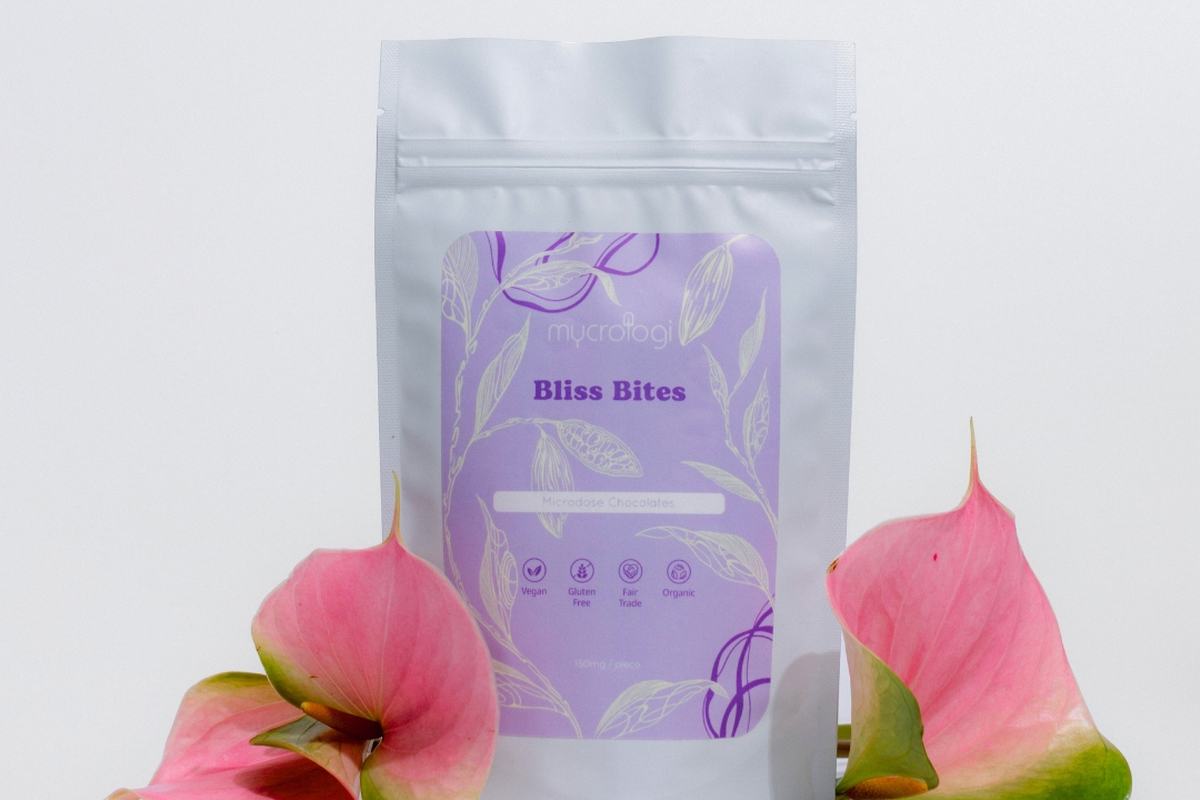
Mushrooms are no substitute for that, and the evidence does not let anyone pretend otherwise. What can be said is that the group studies read better than the solo ones. If you want company working out where to start, the quiz takes a couple of minutes. Microdose Bliss Bites are Lion’s Mane cacao bites in a limited artist edition at $115, easy to hand to somebody. Magic Gummies come 20 to a bag at $72, each holding 100mg of dried psilocybe. The rest is gathered in one place.
Whatever you decide about any of it, the thing worth keeping is that lonely is a signal about a distance rather than a verdict about you. Distances change, and you are not standing in one alone.
Sources
- Holt-Lunstad et al. (2015). Loneliness and social isolation as risk factors for mortality, a meta-analytic review. Perspectives on Psychological Science, 10(2), 227. https://journals.sagepub.com/doi/full/10.1177/1745691614568352
- Holt-Lunstad, Smith and Layton (2010). Social relationships and mortality risk, a meta-analytic review. PLoS Medicine, 7(7), e1000316. https://pubmed.ncbi.nlm.nih.gov/20668659/
- Office of the Surgeon General (2023). Our Epidemic of Loneliness and Isolation. US Department of Health and Human Services. https://www.ncbi.nlm.nih.gov/books/NBK595227/
- Valtorta et al. (2016). Loneliness and social isolation as risk factors for coronary heart disease and stroke. Heart, 102(13), 1009. https://pubmed.ncbi.nlm.nih.gov/27091846/
- WHO Commission on Social Connection (2025). Report of the WHO Commission on Social Connection. World Health Organization. https://www.who.int/publications/b/79027
- Meta-Gallup (2023). State of Social Connections. Gallup. https://news.gallup.com/opinion/gallup/512618/almost-quarter-world-feels-lonely.aspx
- Hawkley and Cacioppo (2010). Loneliness matters, a theoretical and empirical review of consequences and mechanisms. Annals of Behavioral Medicine, 40(2), 218. https://academic.oup.com/abm/article-abstract/40/2/218/4569527
- Bryan et al. (2026). Investigating the interplay of loneliness and social isolation across adolescence, findings from a nationally representative longitudinal study. Development and Psychopathology. https://www.cambridge.org/core/journals/development-and-psychopathology/article/investigating-the-interplay-of-loneliness-and-social-isolation-across-adolescence
- Hsieh and Hawkley (2018). Loneliness in the older adult marriage. Journal of Social and Personal Relationships, 35(10), 1319. https://pmc.ncbi.nlm.nih.gov/articles/PMC7041908/
- Nguyen, Ryan and Deci (2018). Solitude as an approach to affective self-regulation. Personality and Social Psychology Bulletin, 44(1), 92. https://selfdeterminationtheory.org/wp-content/uploads/2018/05/2018_NguyenRyanDeci_PSPB.pdf
- Masi, Chen, Hawkley and Cacioppo (2011). A meta-analysis of interventions to reduce loneliness. Personality and Social Psychology Review, 15(3), 219. https://pmc.ncbi.nlm.nih.gov/articles/PMC3865701/
- Hickin et al. (2021). The effectiveness of psychological interventions for loneliness, a systematic review and meta-analysis. Clinical Psychology Review, 88, 102066. https://pubmed.ncbi.nlm.nih.gov/34339939/
- Sandstrom and Dunn (2014). Social interactions and well-being, the surprising power of weak ties. Personality and Social Psychology Bulletin, 40(7), 910. https://journals.sagepub.com/doi/abs/10.1177/0146167214529799
- Epley and Schroeder (2014). Mistakenly seeking solitude. Journal of Experimental Psychology, General, 143(5), 1980. https://faculty.haas.berkeley.edu/jschroeder/Publications/Epley&Schroeder2014.pdf
- Aron, Melinat, Aron, Vallone and Bator (1997). The experimental generation of interpersonal closeness. Personality and Social Psychology Bulletin, 23(4), 363. https://journals.sagepub.com/doi/10.1177/0146167297234003
- Collins and Miller (1994). Self-disclosure and liking, a meta-analytic review. Psychological Bulletin, 116(3), 457. https://pubmed.ncbi.nlm.nih.gov/7809308/
- Watts, Day, Krzanowski, Nutt and Carhart-Harris (2017). Patients’ accounts of increased connectedness and acceptance after psilocybin for treatment-resistant depression. Journal of Humanistic Psychology, 57(5), 520. https://mindmedicineaustralia.org.au/wp-content/uploads/Interconnect-after-psilcybin-treatment-for-depression_Watts_2017.pdf
- Lyons and Carhart-Harris (2018). Increased nature relatedness and decreased authoritarian political views after psilocybin for treatment-resistant depression. Journal of Psychopharmacology, 32(7), 811. https://pmc.ncbi.nlm.nih.gov/articles/PMC6047302/
- Kettner, Gandy, Haijen and Carhart-Harris (2019). From egoism to ecoism, psychedelics increase nature relatedness. International Journal of Environmental Research and Public Health, 16(24), 5147. https://pubmed.ncbi.nlm.nih.gov/31888300/
- Forstmann, Yudkin, Prosser, Heller and Crockett (2020). Transformative experience and social connectedness mediate the mood-enhancing effects of psychedelic use in naturalistic settings. PNAS, 117(5), 2338. https://pmc.ncbi.nlm.nih.gov/articles/PMC7007572/
- Preller et al. (2016). Effects of serotonin 2A/1A receptor stimulation on social exclusion processing. PNAS, 113(18), 5119. https://pubmed.ncbi.nlm.nih.gov/27091970/
- Watts, Kettner, Geerts et al. (2022). The Watts Connectedness Scale, a new scale for measuring a sense of connectedness to self, others and world. Psychopharmacology. https://pmc.ncbi.nlm.nih.gov/articles/PMC9358368/
- Anderson et al. (2020). Psilocybin-assisted group therapy for demoralized older long-term AIDS survivor men. eClinicalMedicine, 27, 100538. https://pmc.ncbi.nlm.nih.gov/articles/PMC7599297/
- Kettner, Rosas, Timmermann, Kartner, Carhart-Harris and Roseman (2021). Psychedelic communitas, intersubjective experience during psychedelic group sessions predicts enduring changes in psychological wellbeing and social connectedness. Frontiers in Pharmacology. https://pmc.ncbi.nlm.nih.gov/articles/PMC8114773/
- Yudkin et al. (2022). Prosocial correlates of transformative experiences at secular multi-day mass gatherings. Nature Communications, 13, 2600. https://pmc.ncbi.nlm.nih.gov/articles/PMC9142525/
- Forstmann and Sagioglou (2025). Psychedelics and social connectedness. Current Opinion in Psychology, 62, 101992. https://pubmed.ncbi.nlm.nih.gov/39862684/
- Muthukumaraswamy, Forsyth and Lumley (2021). Blinding and expectancy confounds in psychedelic randomized controlled trials. Expert Review of Clinical Pharmacology, 14(9), 1133. https://pubmed.ncbi.nlm.nih.gov/34038314/
- Szigeti et al. (2021). Self-blinding citizen science to explore psychedelic microdosing. eLife, 10, e62878. https://elifesciences.org/articles/62878
- Carhart-Harris et al. (2021). Trial of psilocybin versus escitalopram for depression. New England Journal of Medicine, 384, 1402. https://www.nejm.org/doi/full/10.1056/NEJMoa2032994
- Carbonaro et al. (2016). Survey study of challenging experiences after ingesting psilocybin mushrooms. Journal of Psychopharmacology, 30(12), 1268. https://pubmed.ncbi.nlm.nih.gov/27578767/
- Johnson, Richards and Griffiths (2008). Human hallucinogen research, guidelines for safety. Journal of Psychopharmacology, 22(6), 603. https://pubmed.ncbi.nlm.nih.gov/18593734/
- ClinicalTrials.gov (2026). The Effects of Psilocybin on Social Connectedness, NCT07693153. Yale University. https://clinicaltrials.gov/study/NCT07693153
This article is not intended to diagnose, treat, cure or prevent any disease.