

Here is the honest shape of it. One small study found that psilocybin raised Openness, and only in the people who had a full mystical experience during their session. No well controlled trial has since confirmed a psilocybin-specific effect on that trait. Psychological flexibility is the better supported idea, though nearly all of that evidence comes from surveys rather than from trials.
Meeting the five traits
Personality researchers spent decades narrowing the ways people differ down to five broad dimensions. If you have not met them before, they are worth a slow introduction. Each one works like a slider rather than a category, and most of us sit somewhere in the middle of most of them.
Openness to Experience covers curiosity, imagination, aesthetic sensitivity and appetite for the unfamiliar. Conscientiousness covers how organised and goal-directed someone tends to be. Extraversion covers sociability, energy and how much a person draws from company. Agreeableness covers warmth, trust and how readily someone cooperates. Neuroticism covers how strongly and how often a person feels anxiety, sadness and irritation. None of the five is a verdict on anyone. Those five, measured with a questionnaire like the NEO Personality Inventory, are what researchers mean by personality change.
Openness is the one that shows up in psychedelic headlines, and it is easy to see why. It sounds closest to what people describe after a session that mattered to them.
How much personality moves on its own
Before any claim about mushrooms can mean much, it helps to know what ordinary life does to these traits. Brent Roberts and colleagues answered that in 2006 with a meta-analysis of longitudinal studies in Psychological Bulletin. Their Openness figures give us the baseline for everything that follows.
- Age 10 to 18, d = .23, not statistically significant (K = 13, N = 2,911)
- Age 18 to 22, d = .37, statistically significant (K = 37, N = 3,998)
- Age 22 to 30, d = -.01 (K = 12, N = 702)
- Age 30 to 40, d = .07 (K = 11, N = 541)
- Age 40 to 50, d = -.01 (K = 12, N = 2,660)
- Age 50 to 60, d = .11 (K = 6, N = 317)
- Age 60 to 70, d = -.19, statistically significant (K = 8, N = 507)
- Age 70 and older, d = -.08 (K = 8, N = 458)
Sit with the four adult bands between 22 and 60. Minus .01, plus .07, minus .01, plus .11, and not one of them reaches statistical significance. Across nearly four decades of ordinary adult living, with all the moves and losses that involves, measured Openness barely shifts.
The two places it does move are worth noticing. The college years produce a real rise, and old age produces a real decline. The authors put it plainly.
People showed increases in openness in adolescence (though not statistically significant) and statistically significant increases in the college years (d = .37, p < .05). In the ensuing decades, openness either did not change or declined. Like social vitality, the standardized mean-level change in openness dropped in old age (d = -.19, p < .05).
It is tempting to add those bands up and call it a lifetime of change. The authors gently warn against that, since reading cumulative change this way “is somewhat risky as none of the known longitudinal studies have tracked individuals from birth to death.” What they will say is that across a whole life, most trait domains shift by close to one standard deviation.
So personality is not frozen. It drifts, slowly, over decades, which is its own quiet reassurance. But Openness in particular sits still through most of adult life, and the authors report that none of the statistically significant Openness effects showed evidence of publication bias. A companion meta-analysis by Roberts and DelVecchio in 2000 found that rank-order stability also climbs across adulthood, so people tend to keep their position relative to peers as they age.

The study behind the headline
In 2011, Katherine MacLean, Matthew Johnson and Roland Griffiths published a paper in the Journal of Psychopharmacology whose title travelled a long way in the years afterward. Mystical experiences occasioned by the hallucinogen psilocybin lead to increases in the personality domain of openness.
Here is what the study involved. Fifty-two hallucinogen-naive adults completed two to five eight-hour drug sessions, spaced at least three weeks apart, receiving psilocybin at 30 mg per 70 kg of body weight and, on another session, an active comparator drug, methylphenidate at 40 mg per 70 kg. Personality was measured with the revised NEO Personality Inventory at screening, after each session, and again roughly fourteen months after the last one.
Thirty of the fifty-two met the criteria for a complete mystical experience during their high-dose session. In that group, Openness at follow-up remained higher than at screening by 4.2 T-score points, F(1, 29) = 4.17, p = .050. Among those who did not have a complete mystical experience, Openness at follow-up was essentially identical to screening, a change of -0.3 with p = .86.
T-scores are scaled with a standard deviation of ten, so a lasting rise of 4.2 points corresponds to roughly d = 0.42. Set that against the Roberts adult baseline of about zero and it is a striking number. That contrast is the genuinely interesting part.
There are parts that rarely travel with the headline, and most of us met this finding in its short form first. The comparison drug was an active stimulant rather than an inert placebo, though nobody stays blinded through a high-dose psilocybin session. The volunteers were spiritually active, with ninety percent regularly taking part in religious services, prayer or meditation, which is not a cross-section of anyone. The effect appeared only in the subgroup who had a particular kind of experience, and subgroup findings are the ones most likely to shrink on repetition. That p value of .050 sits exactly on the conventional threshold.
None of that makes the study wrong. It stands as one careful result in a small, unusual sample, which sits some distance from a settled fact.
Why it has not replicated cleanly
The most useful check came from the same group three years earlier. Griffiths and colleagues followed up 36 volunteers fourteen months after a psilocybin session. Fifty-eight percent placed it among the five most personally meaningful experiences of their lives, sixty-seven percent among the five most spiritually significant, and sixty-four percent said it had increased their wellbeing or life satisfaction. Fifty-eight percent met criteria for a complete mystical experience. One line in that paper is worth sitting with.
Of the measures of personality, affect, quality of life and spirituality assessed across the study, only a scale measuring mystical experience showed a difference from screening.
Several questionnaires went out, and only the one asking about the experience itself moved. What lasted was how people rated the session. The trait measures stayed where they were.
Later work has been mixed rather than confirming. Erritzoe and colleagues reported in 2018 that after psilocybin therapy in twenty patients with treatment-resistant depression, Neuroticism fell and Extraversion and Openness rose at three-month follow-up. That is a real result, and it came from an open-label feasibility study with no control condition, so it cannot separate the drug from everything else that comes with two dosing days and a great deal of attention.
The cleanest test so far came from Weiss and colleagues in 2024, a phase 2 double-blind randomised trial comparing psilocybin therapy with escitalopram in major depression. Openness rose at week six in the psilocybin arm (B = 0.23). It also rose in the escitalopram arm (B = 0.28). There were no significant between-condition differences. By month six, what remained changed after psilocybin was Neuroticism and disagreeableness, not Openness. When a common antidepressant produces the same Openness shift as a high-dose psychedelic, the trait-specific story becomes much harder to tell.
Two randomised, placebo-controlled ayahuasca trials by Rocha and colleagues in 2021 found the same inconsistency. Fifteen volunteers in each, personality measured at baseline and 21 days later, and a significant Openness increase in only one of them.
Aday and colleagues reviewed 34 experimental studies with follow-up of at least two weeks and did document enduring changes in personality and attitudes, while calling for larger and more diverse samples, longer designs and stronger control conditions.
Why these trials are so hard to blind
There is a structural difficulty in this field. Psychedelics announce themselves. Anyone who has taken a meaningful dose knows within the hour whether they got the drug or the placebo, and so, usually, does the person sitting with them.
Soliman and colleagues examined sixteen randomised trials in 2024 and found only eight had reported blinding efficacy at all. Among those, participants in the placebo condition correctly guessed their assignment an average of 82.3 percent of the time, and study personnel 91.5 percent of the time. Two LSD studies reported one hundred percent correct guessing.
Muthukumaraswamy, Forsyth and Lumley put the consequence bluntly in 2021, writing that “treatment effect sizes in psychedelic RCTs are likely over-estimated due to de-blinding of participants and high levels of response expectancy” and urging caution in interpreting effect size estimates from existing trials.
This matters more for personality than for most outcomes, because personality is measured by asking people to describe themselves. Someone who has spent months telling the story of a significant experience has good reason to answer a questionnaire about curiosity and imagination a little differently, and there is nothing dishonest in that. Personality-change findings in this field come overwhelmingly from small, self-selected, unblinded samples, and apparent change can reflect expectancy, demand characteristics or simple regression to the mean.
Psychological flexibility, which the evidence supports better
There is a different idea in this literature that holds up better, and it sits closer to what people describe anyway. Psychological flexibility is the capacity to stay in contact with difficult thoughts and feelings without being ruled by them, and to keep acting in line with what you care about while they are present. It behaves more like a skill than a fixed trait, and skills move.
Davis, Barrett and Griffiths surveyed 985 people in 2020 about a past psychedelic experience. Acute mystical and insightful effects were associated with lower depression and anxiety, and increases in psychological flexibility fully mediated that relationship. The design is cross-sectional, everything measured at one moment, so it can describe how these things travel together but not which came first.
A follow-up survey of 1,661 people in 2021 introduced the Psychological Insight Questionnaire, a measure of what people understood about themselves during a session rather than how transcendent it felt. Insight scores predicted unique variance in psychological flexibility, wellbeing and life satisfaction beyond measures of acute mystical-type and challenging effects. Insight adds something the mystical scales were missing. In the Erritzoe trial, the drops in Neuroticism and rises in Extraversion were predicted, in an exploratory analysis, by the degree of insightfulness experienced during the session.
The one behavioural test is smaller and more careful. Doss and colleagues in 2021 ran an open-label study with 24 people with major depression, measuring cognitive flexibility with the Penn Conditional Exclusion Test rather than a self-report form. Perseverative errors, where you keep applying a rule that has stopped working, improved from baseline to one week and held at four weeks, F(2, 40) = 10.90, p < 0.001, and practice did not explain the pattern. The improvements were not correlated with the antidepressant effects at any timepoint, with all correlations below 0.2 and all p values above 0.250. Whatever loosened appears to be separate from whatever lifted the mood.
That is a more modest claim than personality change, and to us a more interesting one. Something in how a person holds their own thoughts appears to soften for a while, which is closer to how people talk about these experiences.
Where microdosing sits in this
It sits outside all of it, and we would rather say so plainly. No study has tested whether microdosing changes Big Five personality traits. The MacLean, Erritzoe and Weiss findings all come from high doses in supervised settings, a different practice from a microdose taken alongside an ordinary week.
What has been tested is less encouraging. Szigeti and colleagues ran a self-blinded, placebo-controlled microdose study in 2021 with 191 completers. Every psychological outcome improved in the microdose group. Every psychological outcome also improved in the placebo group, and no significant differences between the groups were observed. The break-blind rate was 0.72, meaning most people worked out which condition they were in. The authors concluded that “anecdotal benefits of microdosing can be explained by the placebo effect.”
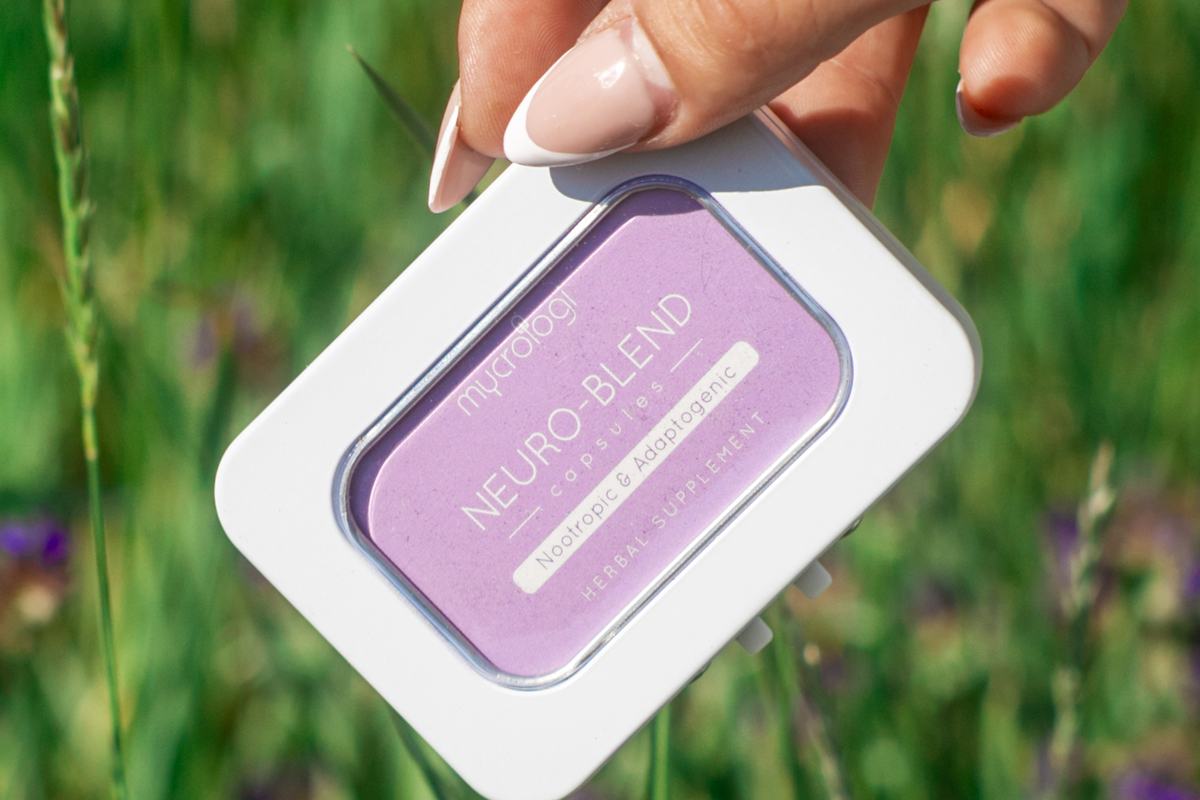
We would rather tell you that than pretend otherwise. A microdose is subtle yet noticeable, and plenty of people find it genuinely useful as part of a routine. That is a fair reason to take one. Asking it to rewrite who you are asks more than the evidence allows. If a steady daily practice is what you are after, Neuro-Blend Capsules pair Lion’s Mane with Golden Teacher across 30 capsules, from $66, and you are welcome to make them part of your week.
How we hold all of this
The Openness story became popular because it offered something specific and measurable in a field full of ineffable language. That is a reasonable thing to be drawn to. It is a good study and it deserved the attention. It has simply not been confirmed by the kind of trial that could settle it, and the best-controlled attempt so far found the same shift in people taking a standard antidepressant.
What the research does support is gentler, and closer to what people tell us. People rate these experiences as among the most meaningful of their lives, and those ratings hold up over more than a year. Something around flexibility appears to move. What people describe afterward is usually a familiar person with more room to move rather than a different person altogether.
That framing is also a kinder guide to practice. If you are considering a higher dose, the preparation that matters is around setting, and having somewhere to put what comes up afterwards. Ritual Therapy Capsules are made for that kind of intentional journey and start at $89, and one capsule is the place to begin. If you are unsure which end of the spectrum suits you, the quiz is a gentle place to start, and the rest of what we make is gathered here.
Personality, on the evidence, is a slow-moving thing. Attention, and how kindly you speak to yourself, moves faster than that. That is the part worth tending, and you can begin today.
Sources
- Roberts BW, Walton KE, Viechtbauer W (2006). Patterns of mean-level change in personality traits across the life course, a meta-analysis of longitudinal studies. Psychological Bulletin, 132(1), 1-25. Full text PDF
- Roberts BW, DelVecchio WF (2000). The rank-order consistency of personality traits from childhood to old age, a quantitative review of longitudinal studies. Psychological Bulletin, 126(1), 3-25. PubMed
- MacLean KA, Johnson MW, Griffiths RR (2011). Mystical experiences occasioned by the hallucinogen psilocybin lead to increases in the personality domain of openness. Journal of Psychopharmacology, 25(11), 1453-1461. PMC full text
- Griffiths RR, Richards WA, Johnson MW, McCann UD, Jesse R (2008). Mystical-type experiences occasioned by psilocybin mediate the attribution of personal meaning and spiritual significance 14 months later. Journal of Psychopharmacology, 22(6), 621-632. PMC full text
- Erritzoe D, Roseman L, Nour MM, MacLean K, Kaelen M, Nutt DJ, Carhart-Harris RL (2018). Effects of psilocybin therapy on personality structure. Acta Psychiatrica Scandinavica, 138(5), 368-378. PMC full text
- Weiss B, Ginige I, Shannon L, Giribaldi B, Murphy-Beiner A, Murphy R, Baker-Jones M, Martell J, Nutt D, Carhart-Harris R, Erritzoe D (2024). Personality change in a trial of psilocybin therapy v. escitalopram treatment for depression. Psychological Medicine, 54(1), 178-192. PMC full text
- Rocha JM, Rossi GN, Osorio FL, Bouso JC, Silveira GO, Yonamine M, Crevelin EJ, Queiroz MEC, Hallak JEC, dos Santos RG (2021). Effects of ayahuasca on personality, results of two randomized, placebo-controlled trials in healthy volunteers. Frontiers in Psychiatry, 12, 688439. PMC full text
- Davis AK, Barrett FS, Griffiths RR (2020). Psychological flexibility mediates the relations between acute psychedelic effects and subjective decreases in depression and anxiety. Journal of Contextual Behavioral Science, 15, 39-45. PMC full text
- Davis AK, Barrett FS, So S, Gukasyan N, Swift TC, Griffiths RR (2021). Development of the Psychological Insight Questionnaire among a sample of people who have consumed psilocybin or LSD. Journal of Psychopharmacology, 35(4), 437-446. PMC full text
- Doss MK, Povazan M, Rosenberg MD, Sepeda ND, Davis AK, Finan PH, Smith GS, Pekar JJ, Barker PB, Griffiths RR, Barrett FS (2021). Psilocybin therapy increases cognitive and neural flexibility in patients with major depressive disorder. Translational Psychiatry, 11, 574. PMC full text
- Muthukumaraswamy SD, Forsyth A, Lumley T (2021). Blinding and expectancy confounds in psychedelic randomized controlled trials. Expert Review of Clinical Pharmacology, 14(9), 1133-1152. PubMed
- Soliman N, et al. (2024). Blinding efficacy and adverse events following repeated administration of psilocybin, a systematic review. Psychopharmacology, 241(6), 1101-1114. PMC full text
- Szigeti B, Kartner L, Blemings A, Rosas F, Feilding A, Nutt DJ, Carhart-Harris RL, Erritzoe D (2021). Self-blinding citizen science to explore psychedelic microdosing. eLife, 10, e62878. PMC full text
- Aday JS, Mitzkovitz CM, Bloesch EK, Davoli CC, Davis AK (2020). Long-term effects of psychedelic drugs, a systematic review. Neuroscience and Biobehavioral Reviews, 113, 179-189. PubMed
This article is not intended to diagnose, treat, cure or prevent any disease.